

The Question Most Implant Patients Ask, and Few Practices Answer Directly
Once you decide to replace a missing tooth with an implant, the next question is usually who should do it. Your general dentist may offer to place it. A friend swears by their oral surgeon. Your insurance directory lists periodontists. Each one can legally place implants, so how do you choose?
The honest answer is that the title on the door matters less than the training, experience, and planning behind the procedure. Here’s what each type of provider brings to implant care, what to look for, and how Dr. Dean Glasser approaches implant treatment at our Melville office.
If you’re already weighing your options, we’re happy to review your case and give you an honest recommendation. Call 631-423-6767 to schedule a consultation, or learn more about dental implants in Melville.
Who Is Allowed to Place Dental Implants?
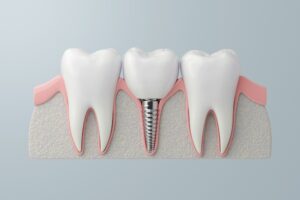 In New York, as in every state, any licensed dentist can place dental implants. There’s no separate license for it. That means a dentist who took a weekend course and a dentist with decades of advanced training can both advertise implant services.
Dental school provides only a basic introduction to implants. The real differences come from what a dentist does after graduation: residency programs, post-graduate implant training, credentialing exams, and years of hands-on cases.
How Oral Surgeons, Periodontists, and General Dentists Compare
| Provider | Training after dental school | Implant role | Typical patient path |
| Oral and maxillofacial surgeon | Hospital-based surgical residency, usually 4 to 6 years | Places the implant; handles complex jaw and bone surgery | Referred in for surgery, then back to another dentist for the crown |
| Periodontist | Residency in gum and bone tissue, usually 3 years | Places the implant; treats gum disease and soft tissue around implants | Referred in for surgery, then back to another dentist for the crown |
| General dentist with implant training | Optional residency plus post-graduate implant education and credentialing | Plans, places, and restores the implant, then maintains it | One office from consultation through long-term care |
Oral and Maxillofacial Surgeons
Oral surgeons complete hospital-based residencies focused on surgery of the mouth, jaw, and face. They’re well suited to cases involving major bone reconstruction, jaw abnormalities, or complex medical histories. In most cases, though, an oral surgeon places the implant and then sends you to another dentist to design and attach the crown.
Periodontists
Periodontists specialize in the gums and the bone that supports teeth. Their training makes them a good fit for patients with significant gum disease or soft tissue concerns around the implant site. Like oral surgeons, they typically place the implant and refer you elsewhere for the final tooth.
General Dentists With Advanced Implant Training
A general dentist with serious implant training can handle the entire process in one office: planning, surgery, the final crown, and years of follow-up care. Because training among general dentists ranges so widely, this is the group where you need to look most closely at credentials.
Why the Final Tooth Should Guide the Surgery
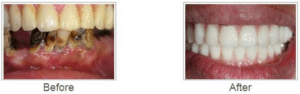
An implant isn’t finished when the post is placed. What you see and chew with is the crown, bridge, or denture attached to it. If the implant is placed at the wrong angle or depth, the dentist making the final tooth has to work around it, which can affect appearance, bite, and how easy the area is to clean.
That’s why many implant educators teach restoration-driven planning: design the final tooth first, then place the implant where that tooth needs it. When one dentist handles both steps, the surgical plan and the restoration come from the same person. When two offices are involved, that planning depends on how well they communicate.
Neither path is wrong. But it’s a good reason to ask any provider who designs the final tooth and how the surgical plan accounts for it.
The Credentials That Actually Matter
When you’re comparing providers, these are the details worth checking:
- Post-graduate implant training. Look for structured programs with hands-on surgical components, not just short courses. Dr. Glasser completed formal implant training at the Misch Implant Institute in 1995.
- Implant organization credentials. Groups like the International Congress of Oral Implantologists (ICOI) award Fellow and Diplomate status only after documented cases, continuing education, and examination. Dr. Glasser holds both. Our post on what ICOI Fellow and Diplomate mean explains the requirements.
- Hospital or residency experience. A general practice residency adds hospital-based training in treating medically complex patients. Dr. Glasser completed his at Bronx Lebanon Hospital Center.
- Teaching and protocol work. Dentists who teach implant dentistry or help write surgical protocols are held to a high standard by their peers. Dr. Glasser is a professor at Columbia University’s dental school, established the implant protocol at the university dental school, and was part of the team that developed an implant manufacturer’s surgical protocol.
- In-house grafting. Many implant patients need bone grafting or a sinus lift first. A provider who performs these procedures can manage more cases without a referral.
- 3D planning technology. Cone beam CT imaging and guided surgery systems like X-Guide improve placement accuracy regardless of who holds the drill.
When a Specialist Referral Makes Sense
A trustworthy implant dentist knows the limits of what should be done in a general practice setting. A referral to an oral surgeon or periodontist may be the right call for severe jaw bone loss that needs major reconstruction, certain medical conditions that require hospital-level care, or advanced gum disease that has to be treated first.
If a dentist tells you your case is better handled elsewhere, that’s a sign of good judgment, not a lack of skill. The goal is the right outcome for you.
Talk With an Experienced Implant Dentist in Melville, NY
If you’re weighing where to have your implant placed, we’re happy to review your case and give you an honest assessment, including whether a specialist would serve you better. To schedule a dental implant consultation, call 631-423-6767 to contact our Melville dental office. We serve patients from across Long Island.