Hard Bumps in Your Mouth Are More Common Than You Think
Have you ever run your tongue along the roof of your mouth or the inside of your lower jaw and felt a hard, smooth bump? Many people find these bumps by accident and worry right away. In most cases, the bump is a torus, a harmless overgrowth of bone. Tori (the plural of torus) rarely need treatment, but they can get in the way of eating, speaking, or wearing dentures.
If you’ve noticed a bump and aren’t sure what it is, call Implant & General Dentistry of Long Island at 631-423-6767 to schedule an exam. Dr. Dean Glasser and Dr. Renee Glasser can identify the growth and talk through your options at our Melville office.
What Are Oral Tori?
Oral tori are noncancerous bony growths covered by a thin layer of gum tissue. They aren’t contagious, and they aren’t a sign of infection. Tori usually develop slowly over many years and are most often noticed in adulthood. The exact cause isn’t fully known, but genetics seem to play a large role, and tori often run in families. Researchers have also linked tori to teeth grinding and clenching (bruxism), which puts extra stress on the jawbone.
Types of Oral Tori
Tori are named for where they grow. The three most common types are:
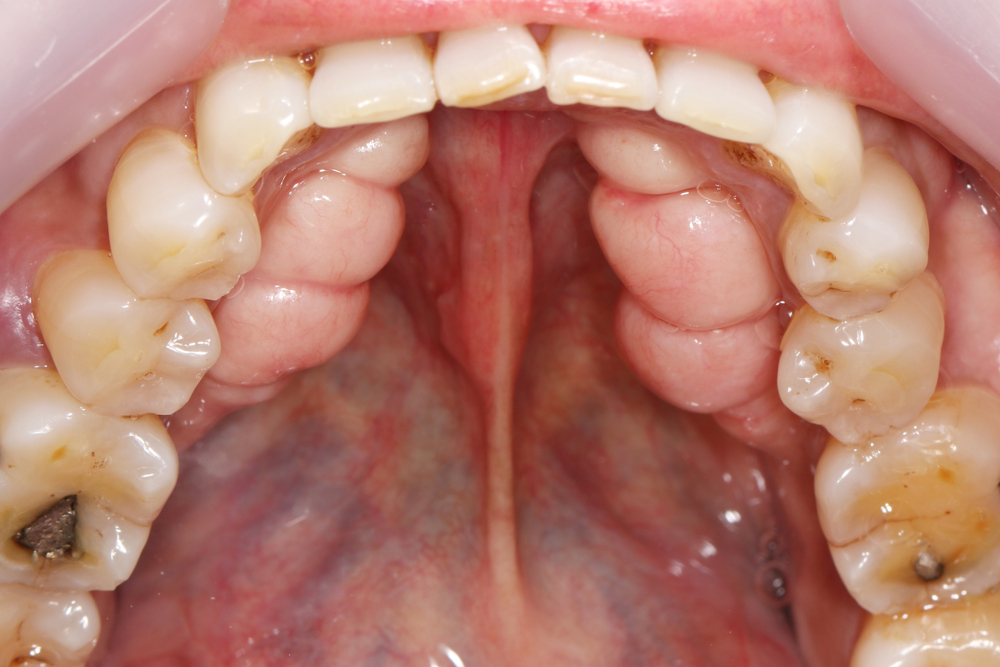
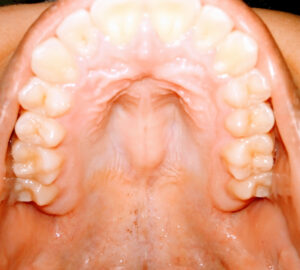
- Torus Palatinus: A bump along the center of the roof of the mouth. It can be smooth, lobed, or flat.
- Torus Mandibularis: Bumps on the tongue side of the lower jaw, near the premolars. They often appear on both sides.
- Buccal Exostoses: Smaller bony growths on the cheek side of the upper or lower gums.
How to Tell If You Have Tori
Most tori cause no symptoms, so many people only learn about them during a routine dental exam. You may have tori if you notice:
- A hard, bony bump that doesn’t move when you press on it
- Smooth tissue over the bump that matches your gums or looks slightly paler
- Matching bumps on both sides of the lower jaw
- Tissue over the bump that scrapes or tears easily when you eat crunchy foods
- A growth that has stayed about the same size for months or years
A dentist can usually identify tori with a simple visual exam. Dental X-rays or a cone beam CT scan can confirm the diagnosis and show the bone’s size and shape.
When a Bump Needs Prompt Attention
Not every lump in the mouth is a torus. See a dentist soon if a bump is soft, painful, bleeding, or growing quickly. The same goes for a sore that doesn’t heal within two weeks. These signs call for a closer look to rule out infection or oral cancer.
When Is Tori Removal Recommended?
Tori that don’t cause problems can simply be monitored at your regular checkups. Removal may make sense when tori:
- Keep full or partial dentures from fitting properly
- Get scraped or cut often while eating, leading to painful sores
- Make speaking, chewing, or swallowing difficult
- Trap food and make the area hard to keep clean
- Are in the way of dental implants or other oral surgery
What to Expect During Tori Removal
Tori removal is a minor oral surgery, usually done in the office under local anesthesia. Sedation may be available for patients who feel anxious. The surgeon makes a small incision in the gum tissue, gently folds it back, and reduces the excess bone. Dental lasers can remove and contour bone and soft tissue precisely, and traditional surgical instruments are another option. Once the bone is smooth, the tissue is put back in place and closed with stitches.
In some cases, the removed bone can be saved and used as grafting material for future procedures, such as dental implants.
Recovery After Tori Removal

Most patients get back to their normal routine within a few days. The gum tissue usually takes about two weeks to fully heal. A few simple steps help you heal comfortably:
- Eat soft, cool foods for the first several days
- Avoid crunchy, spicy, or very hot foods until the area heals
- Rinse gently with warm salt water after the first 24 hours
- Take pain relievers as directed
- Keep your follow-up visit so we can check your stitches
Some swelling and tenderness are normal. Healing after removal from the roof of the mouth can take a little longer. Tori rarely grow back once they’re removed.
Get Answers About Oral Tori in Melville, NY
A bony bump in your mouth is usually nothing to worry about, but you shouldn’t have to guess. Our team can confirm what it is, keep an eye on it over time, or remove it if it affects your comfort or your dental plans. Call Implant & General Dentistry of Long Island at 631-423-6767 to schedule a dental appointment in Melville.