

Protecting the Foundation Beneath Your Smile
Periodontics is focused on the structures that hold your teeth in place: your gums, the surrounding bone, and the ligaments that anchor everything together. It's easy to think of dental health as being only about the teeth themselves, but a tooth is only as stable as the foundation underneath it.
Dr. Dean Glasser and Dr. Renee Glasser provide a full range of periodontal care for patients throughout Huntington, Dix Hills, and Plainview, from routine gum health monitoring to advanced bone grafting.
If you've noticed bleeding gums, sensitivity, or any change in how your teeth feel, call 631-423-6767 to schedule an evaluation.
Why Choose Dr. Dean and Dr. Renee Glasser for Periodontal Care
Gum disease is easiest to control when one team can diagnose it, treat it at every stage, and keep it from coming back. At Implant & General Dentistry of Long Island, that whole path happens in one office, planned for the long term: keeping your natural teeth stable, and when a tooth can't be saved, making sure the bone is ready for whatever replaces it.
- An implant dentist's view of bone. Dr. Dean Glasser completed formal implant training at the Misch Implant Institute in 1995, is a Fellow of the Institute, and holds both Fellow and Diplomate status with the International Congress of Oral Implantologists. That background shapes how he measures bone loss and plans grafting.
- Protocols other dentists follow. He established the implant protocol at a university dental school and was part of the team that developed an implant manufacturer's surgical protocol.
- Advanced procedures in our office. Laser therapy, bone grafting, and sinus lifts are performed here, so moderate and advanced cases don't stall while you wait on an outside referral.
- Two faculty dentists. Dr. Dean Glasser is a professor at Columbia University Dental School and an attending at Columbia Presbyterian Medical Center. Dr. Renee Glasser is a Clinical Assistant Professor in the Department of General Dentistry at Stony Brook University School of Dental Medicine.
- Comfort for anxious patients. Dr. Dean Glasser is certified by the New York State Department of Health to administer enteral sedation, which makes sedation dentistry a real option for patients who have put off deep cleanings out of fear.
What Does Periodontal Treatment Address?
Periodontal care covers any condition affecting the gums, jawbone, or supporting tissue around your teeth, most commonly gum disease and the bone loss that comes with it.
Treatment ranges from a straightforward deep cleaning for early gum inflammation to gum contouring for patients worried about a "gummy smile" or other aesthetic issues.

What Is Gum Disease?
Gum disease, also called periodontal disease, is a bacterial infection of the tissue and bone that surround and support your teeth. It begins as gingivitis, an early and reversible stage marked by redness, swelling, and bleeding.
If left untreated, it can progress into periodontitis, where the infection starts breaking down the bone that holds your teeth in place. Left unchecked long enough, that bone loss leads to loose teeth and, eventually, tooth loss. Catching it early is what makes treatment simple instead of complicated.
The Stages of Gum Disease
Gum disease progresses in stages, and understanding where you fall helps explain why your treatment plan looks the way it does:
Gingivitis
The earliest stage, caused by plaque buildup along the gumline. Gums become red, swollen, and prone to bleeding, but the damage is still reversible with proper care.
Early Periodontitis
The infection starts to affect the bone beneath the gums. Small pockets begin to form between the teeth and gums, trapping bacteria and often causing persistent bad breath.
Moderate Periodontitis
Pockets deepen, and bone loss becomes measurable. Teeth may start to feel slightly loose, and gum recession becomes more noticeable.
Advanced Periodontitis
The most severe stage, marked by significant bone and tissue loss, shifting or loose teeth, and a real risk of tooth loss without intervention.
Signs You May Have Gum Disease
Gum and bone problems don't always announce themselves loudly. Watch for:
- Gums that bleed when you brush or floss
- Red, swollen, or tender gums
- Gums that appear to be receding or pulling away from your teeth
- Persistent bad breath that doesn't improve with brushing
- Teeth that feel loose or have shifted position
- Increased sensitivity around the gumline
If any of these sound familiar, it's worth having it looked at before it progresses further. Call 631-423-6767 and our team can get you scheduled.
Periodontal Treatment at Implant & General Dentistry of Long Island
Every plan starts with an evaluation. We assess gum health, measure pocket depth around each tooth, and review dental X-rays to check the bone level beneath the gums. From there, we determine your stage and build treatment around it rather than taking a one-size-fits-all approach. Once the active infection is under control, we set up a maintenance schedule designed to keep it from coming back.
 Scaling and Root Planing
 Scaling and Root Planing
Scaling and root planing is a deep cleaning that removes plaque and tartar buildup from below the gumline, then smooths the root surfaces so gums can reattach and heal properly. It's typically performed with local anesthesia for comfort and remains the standard first-line treatment for early to moderate gum disease.
Laser Gum Therapy
 Laser Gum Therapy
For patients who want a less invasive option, our office offers laser-assisted periodontal treatment using our Fotona laser system. Laser therapy removes diseased tissue while preserving healthy gum and bone, often with less discomfort and faster healing than traditional surgical approaches.
 Bone Grafting
 Bone Grafting
When periodontal disease has already caused bone loss, a bone graft can rebuild that lost structure, both to stabilize existing teeth and to prepare the area for a future dental implant if one is needed.
Periodontal Maintenance
Once active treatment resolves the infection, ongoing maintenance cleanings help keep gum disease from returning. These visits are usually scheduled more often than a standard six-month checkup.
Why Periodontal Health Matters Beyond Your Gums
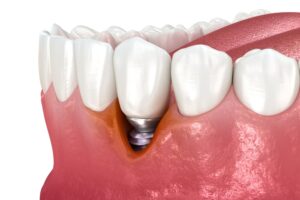 Research has linked untreated gum disease to broader health concerns, including cardiovascular disease and complications for patients managing diabetes.
Gum health is also directly connected to implant dentistry: healthy gums and adequate bone are prerequisites for a successful dental implant, which is why periodontal treatment often comes first for patients planning implant restoration down the road.
Preventing Gum Disease
A few consistent habits go a long way toward keeping gum disease from developing in the first place:
- Brush at least twice a day with a soft-bristled toothbrush
- Floss daily to clear plaque from between teeth and along the gumline
- Use an antibacterial mouth rinse if recommended by your dentist
- Keep up with regular dental exams and cleanings every six months
- Avoid tobacco products, which significantly raise the risk of gum disease
- Manage conditions like diabetes, which can make gum disease more likely and harder to control
Frequently Asked Questions
Protect Your Gums Before Bad Breath Becomes a Bigger Problem
Healthy teeth start with healthy gums and bone underneath them. Dr. Dean Glasser and Dr. Renee Glasser help patients throughout Huntington, Dix Hills, and Plainview address periodontal concerns before they turn into bigger problems.
Call our Melville dental office at 631-423-6767 to schedule your periodontal evaluation, or reach out through our online contact form. A stronger foundation for your smile starts here.