Compare Restorative Dentistry Solutions With Our Melville Implant Dentist
If you’re missing several teeth or facing a full extraction, you’re probably weighing two very different paths forward. One is traditional dental implants, placed one at a time to replace individual teeth. The other is All-on-4, a technique that replaces an entire arch of teeth using just four strategically placed implants. Both options can give you a smile that looks and functions like your own, but they’re built for different situations, different budgets, and different timelines.
At Implant & General Dentistry of Long Island in Melville, NY, Dr. Dean Glasser and Dr. Renee Glasser have helped patients throughout Huntington, Farmingdale, and Syosset sort through this decision. There’s no single right answer for everyone. The right choice depends on how many teeth you’re replacing, the condition of your jawbone, and how quickly you want results.
If you’re missing several teeth, dealing with loose or failing teeth, or have been told in the past that you don’t have enough bone for implants, it’s worth getting a second opinion. Call (631) 423-6767 to schedule a consultation with Dr. Glasser’s team in Melville. A CT scan and a conversation can tell you more in one visit than months of wondering.
What Are Traditional Dental Implants?
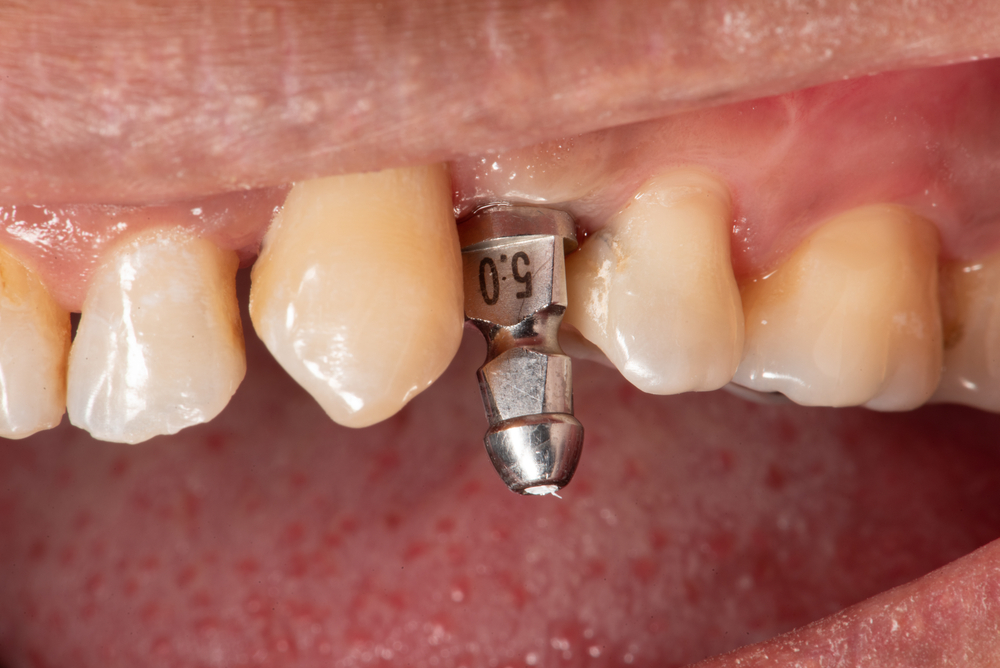
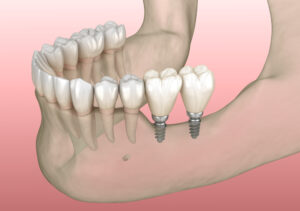
Traditional implants replace teeth one at a time or in small groups. Each implant is a titanium post, surgically placed where a tooth root used to be. Once the bone heals around it, called osseointegration, a crown is attached on top. The result looks and functions like the real thing.
 Traditional implants tend to be the better fit if:
- You’re missing one tooth, a few teeth, or several scattered across the mouth
- You have good bone density, or you’re open to a bone graft if needed
- You want each tooth treated on its own, so future work on one doesn’t affect the others
- You’re comfortable with a longer timeline in exchange for that flexibility
The tradeoff is time. Traditional implants need sufficient bone density at each site. If you’ve lost bone mass, which is common after a tooth has been missing for a while, you may need a graft first. That adds months to the process, and healing alone often takes three to six months.
What Is All-on-4?
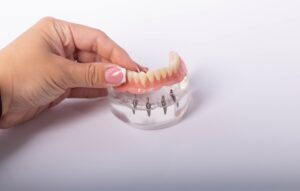
All-on-4 takes a different approach for patients who need a full arch of teeth replaced, whether that’s the top, the bottom, or both. Instead of placing an implant for every missing tooth, four implants are positioned at specific angles to support an entire arch of prosthetic teeth. The back two are angled to take advantage of denser bone, which often means avoiding a bone graft, even with some bone loss.
 All-on-4 tends to be the better fit if:
- You’re missing most or all of the teeth in an arch, or facing extractions that will lead to that
- You’ve been told in the past that you don’t have enough bone for implants
- You want a faster path to a working, fixed smile
- Cost is a real factor, since fewer implants generally means a lower total investment
The biggest draw of All-on-4 is speed. In many cases, a temporary full set of teeth can be attached the same day as surgery. You leave with a working smile rather than waiting months for a final result. The permanent prosthetic is fitted later, once healing is complete, but you’re not without teeth in the meantime.
Comparing the Two: Key Differences
The decision often comes down to a few practical questions. How many teeth need replacing? How much bone loss is there? What kind of coverage do you have? Let’s break down some key differences.
All-on-4 vs Traditional Implants at a Glance
| Factor | Traditional Implants | All-on-4 |
| Best for | One tooth, a few teeth, or scattered gaps | A full arch of missing or failing teeth |
| Number of implants | One per missing tooth, sometimes more | Four implants per arch |
| Bone grafting | Often needed if the bone has receded | Frequently avoided due to angled placement |
| Timeline | Several months, done in stages | Same-day temporary teeth in many cases |
| Removable? | No, each crown is permanently fixed | No, the full arch is fixed in place |
| Cost | Higher per tooth, scales with how many are needed | Lower per arch since fewer implants are used |
How Dr. Glasser Determines Which Option Fits You
 Every recommendation starts with a thorough evaluation. Dr. Glasser uses cone-beam CT scanning to obtain a detailed, three-dimensional view of your jawbone, nerve position, and sinus structure before any treatment plan is developed. This imaging shows exactly how much bone is available and where, which is often the deciding factor between the two approaches.
For implant placement, Dr. Glasser also uses the X-Guide Dynamic 3D Navigation System. This technology offers real-time guidance during surgery, helping place each implant with precision. Whether you’re a candidate for a single implant or a full-arch All-on-4 case, this same level of planning applies.
What This Means for Your Daily Life
Beyond the clinical details, the real question patients ask is simpler: Will this let me eat, speak, and smile without thinking about my teeth again? Traditional implants and All-on-4 both aim for that outcome, just by different roads. Patients who choose All-on-4 often describe the relief of waking up with a functional smile again after years of declining teeth. Patients who choose traditional implants often appreciate keeping as much of their natural smile intact as possible, tooth by tooth.
Neither path is better in a vacuum. The better path is the one that matches your mouth, your bone structure, and your goals. That’s exactly what a consultation is for.
Discover Which Option is Best For You With Our Melville Implant Dentist
Patients from Melville, Huntington, Farmingdale, and Syosset trust Dr. Glasser’s Long Island dental office for implant work because of the planning that goes into every case before surgery begins. If you’ve been putting off a decision about missing or failing teeth, now is a good time to get real answers. Call (631) 423-6767 to schedule your consultation and find out which option, traditional implants or All-on-4, fits your smile.